
This article continues the series of interviews conducted with members of the faculty of Shepherd School of Music at Rice University for OperaWire, the original article can be found here.
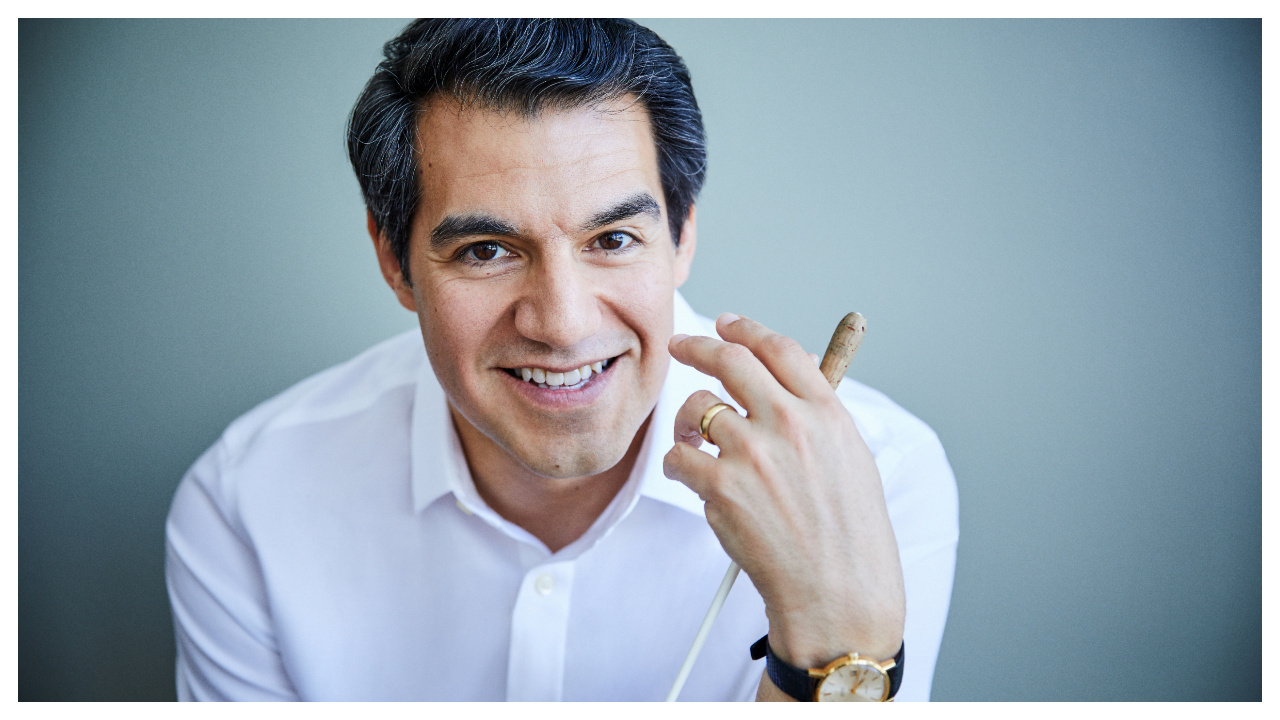
I had the opportunity to speak with Miguel Harth-Bedoya, who officially joined the faculty last fall as their Resident Director of Orchestras and Professor of Conducting. Drawing from over 35 years years of experience, Harth-Bedoya oversees conducting for nearly all the school’s orchestral performances, and in the upcoming school year will launch a new, undergrad orchestral conducting program.
SF: You started off a designate, then became a full member of the faculty last fall. What about the school do you feel drew you to a more lasting position?
MHB: “Let’s start with the designate part, which was a fortunate/misfortunate situation that I couldn’t accept back in 2024/25 because of prior commitments, one of them was the Met in the fall, so I wouldn’t have been able to start an official position for basically three months, but that time as a designate allowed me to build in preparation for my first year, rather than use my first year to start building things. A few things of importance happened there: first, I was able to hold auditions for graduate conducting students, then I was able to do the programming, because the Shepherd School is like a professional orchestra and opera company, we print all the programs, and that’s not so much for marketing but it’s our curriculum. The third thing was being able to create the Bachelor of Music and Orchestral Conducting degree. So, it took nine months to create that, and the first class has auditioned already, and we’ll start next fall.
So, my first year I felt like I was ready running, and it’s very important because it’s the student’s time. It’s one year out of two for some students, or one out of three if undergrad, so this is about the students and the music, it’s not about me and my department.”
SF: What are your thoughts on ‘Falstaff’s’ departure from Verdi’s more usual style of composition?
MHB: “Verdi evolved in himself. If we look at Puccini, that’s a little bit different, because he already brought something in and kind of molded it, but if we go to ‘Nabucco’ and then ‘Rigoletto’ and what I call the last three operas: ‘Falstaff,’ ‘Otello,’ and the ‘Requiem,’ because to me it’s his magnum opus which is so interconnected to his operatic writing; one needs to know there’s not just one way to do Verdi. I grew up listening to him when I was a teenage working in a theater, so there’s never enough ‘Traviata’s or ‘Rigoletto’s or ‘Aida’s, but I don’t get tired of Verdi. Alcina! He has Inca characters, I’m from Peru, and it’s incredible how he would create characters from something that was so remote back then…
The hard part of conducting this is not getting carried away, because it’s so great, If I blink, I become an audience member, and then it’s like ‘what happened?’”
SF: This production boasts the largest orchestra the school has presented, what’s that been like to organize?
MHB: “This reminds me of something not too related, but I remember hearing of a meeting where the biggest tech companies came together, and the CEO of Apple said something like: ‘I’m in the wrong place, because you said this is for the biggest. We’re not the biggest, we’re just the best.’ So it’s a little like that; bigger isn’t the challenge, being the best is.
It just happens to be that the facility and infrastructure can accommodate that many. Numerous opera companies, particularly regional ones, can be limited by the size of the pit, so they have to make certain arrangements or reductions, and I understand that has to happen otherwise you don’t have anything. Here we have the luxury that is Brockman Hall for Opera, we’ve done all the rehearsals for the opera in the pit; that’s our classroom. Even at the Met, everyone is rotating between rehearsing upstairs, downstairs, that type of scenario- so yeah, big is not the problem here.”
SF: You’ll be launching a new orchestral conducting program in the upcoming school year. What can you tell us about it at this time?
MHB: “In brief, one of my diplomas is Bachelor’s of Music and Orchestral Conducting from the Curtis Institute of Music, and my academics were at U Penn, which were incredibly hard. So that means that Shepherd School within Rice reminds me of my earlier days, and part of my teaching is to pass on what I’ve been taught, the things that have been shared with me, and that means everyone will do them differently.
It’s almost impossible to teach in theory, you know. I think because we’re very hands-on. So this degree I feel, is the equivalent to pre-med. Can you imagine going to grad school for conducting, having skipped the basics, or a doctor who has to perform surgery without having the proper experience? So, you have to do the same thing with music. For instance, just to get into graduate program in conducting here, in addition to orchestral repertoire, applicants have to do recitatives in four languages. I dropped it down from five; Russian they can learn here, but Italian, German, French, and English, they’ll learn that in their undergrad, gradually, and while the brain is still a sponge. It’s much easier to get languages when younger; I was fortunate enough to graduate high school with four languages, so my fifth was English when I came to America.
I always say, if you want to invest in conducting, focus on language. It’s not so much conversational, but it’s the diction, the vocabulary; if you have to get a libretto you really can’t function. So, the undergrad is those four slow, steady years, and I say that’s a keyword rather than rushed and fast, so that when students get to grad school they don’t have to worry about certain skills. They’ll be able to study more effectively, and will have seen enough of what the life of an orchestra is, and the relationship a conductor has with one; that can’t be learned over a course or weekend.”