
Last month, the Shepherd School of Music at Rice University presented Verdi’s touching comedy, ‘Falstaff.’ Through my work with OperaWire, I was invited the cover the performance and speak with members of the faculty about the upcoming performance, and the school as a whole.
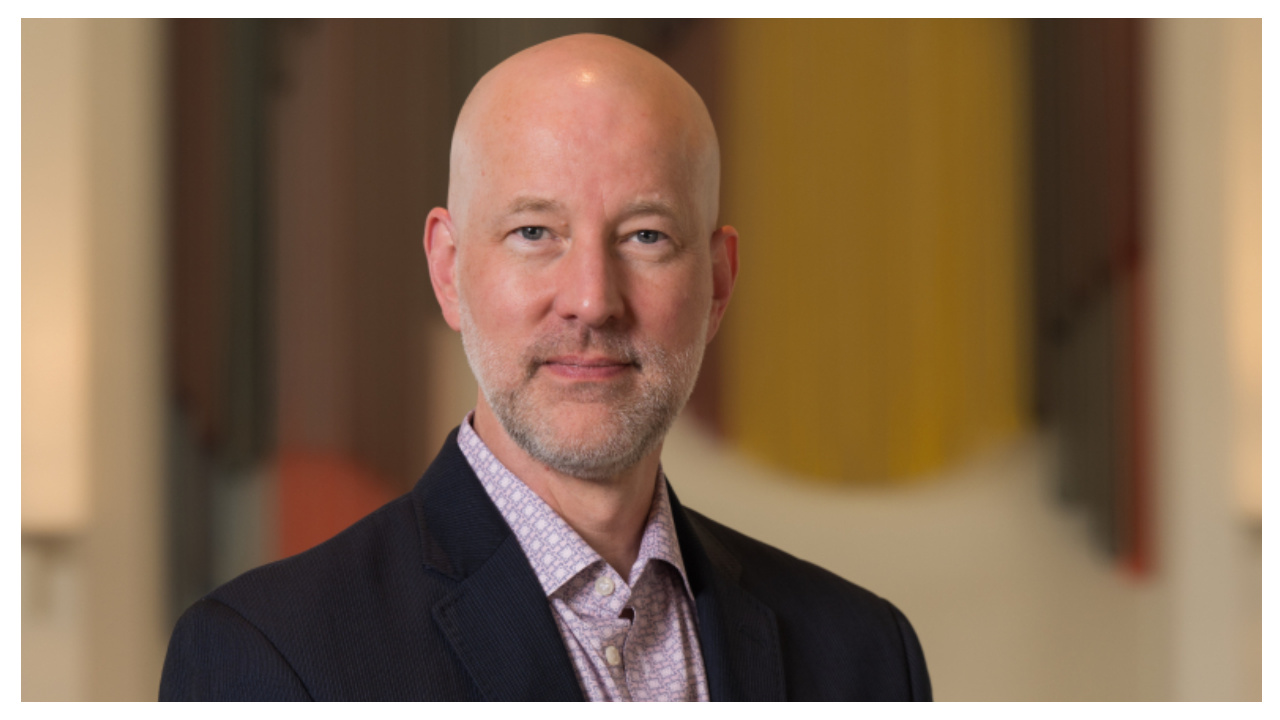
Joining as Dean of Music in 2021, Matthew Loden brings with him significant experience as an administrator and as an artist. Previously the CEO of the Toronto Symphony Orchestra, Loden has also held leading positions with companies such as the Philadelphia Orchestra, the Aspen Music Festival and School, and the Academy of Music in Philadelphia. As a violinist, he has performed with the orchestras of the Kennedy Center Opera and Ballet, the National Symphony Orchestra, the Houston Grand Opera and Ballet, among others.
I had the opportunity to speak with Dean Loden about his experience leading the Shepherd School, as well as his approach to administration in the arts in today’s landscape.
SF: Between the opening of Brockman Hall and numerous artistic programs and partnerships like the concert truck, what were some of the challenges of all these initiatives?
ML: “Rice University has always had a very close relationship with Houston and it’s an important pillar in all our strategic planning. We are of Houston and of Texas, and want to take care of our neighbors, and we also want to be a resource for the people here, and so one of the things that our own community engagement through the Shepherd School is able to achieve is to find new ways to connect with people who already lovers of our music, and those who might not know anything about all the kinds of music that we spend so much time working on, performing and preparing.
The concert truck initiative came about through some wonderful support through The Cullen Performing Arts Trust and a number of other donors helped us fund a truck where we could take student who, through the normal course of their training, were going to work up let’s say a Beethoven string quartet, we could take that musical content then figure out ‘what’s the best way to share that Beethoven with people who are coming to the redo, a baseball game, at the park, or just people at the other end of campus who haven’t made their way to the Shepherd School. We worked really hard to find different pockets where we could drive the truck, park, put the stage down, and start a show. I think it’s a tangible example of the way that we continually try to help our music major understand how important it is to connect, to not just play beautifully by yourself, in a practice room, or even in a concert hall, but there’s a responsibility to share that music as far and wide as possible. That went a long way towards trying to get more people to be amazed at what some of this great art can do.”
SF: How would you describe your approach to administration? What would you say are the principles that have guided the actions of your tenure so far?
ML: “I think I learned the most about being in this world of music when I was a young violinist in a string quartet in junior high school and in high school. I often found myself being the second violinist; the youngest, when everyone was stronger, better, faster than I was, and I was desperately trying to keep up. What I learned from that was when I expected of myself as much as others around me were expecting of me, and when I was put in a position where I had an individual responsibility to show up with a skill set that was going to contribute to a collective in a certain way. That collective, that moving towards something, that building of an ensemble for a performance, or of a school, that’s the most exciting rush that there is, to feel like you have something that you can add, that’s going to have impact and is going to make a difference somewhere, and that you’re constantly looking for ways to be better than you think you can be.
So, if I have a sort of leadership philosophy, it’s to take some of the things that I learned performing in ensembles and quartets that I think about it as learning how to listen to yourself. To know if you’re actually producing what you’re supposed to be producing, if you’re actually adhering to what your job specifications are, what your limit is, that’s really important. But more important is what we talk about in orchestra land as listening horizontally, to listen across the ensemble, to listen across the stage, to figure out at what point should you shut up and get out of the way because you don’t actually have the solo, or at what point do you actually have to play louder than you think you do in order to be a supporting voice, because someone else is going to sit on the foundation that you’re generating. I try whenever possible to use the crucible of great chamber music, performance, and practice, as a sort of metaphor for how we try to put things together with the Shepherd School.”
SF: Having been recently appointed for a second tenure, do you see yourself continuing what you’ve started thus far, or are there new initiatives being planned?
ML: “We are in a multi-year generational shift in our faculty, and one of the most critical components of what makes us successful is ‘who are the people that are here teaching?’ and the folks that have extraordinarily built this place, many of them are now retiring. Over the next couple of years they will continue to retire, so one of the most important things that I have to do is identify the next generation of teachers, and wonderfully we’re in a position at the Shepherd School where there’s a lot of people that are eager to be a part of this, to be on the faculty, and to be involved in leaning forward, being smart about what the industry is right now. What’s the ecosystem of the musical arts, and what is it that we need to be teaching so that our students are as best prepared as they possibly can be once they get out into that world.
So I’m really excited about the new talent that we get to engage with, as we begin to embark on some more of these searches. I’m also really excited about the initial conversations that we’re having about the role of technology, the role of artificial intelligence and music and the creative practice, and where we see ways that it might inform what we’re already doing…
The other thing I’m excited about is our leadership here at Rice University. Reggie DesRoches and our provost Amy Dittmar, along with the other deans, have done a really extraordinary job of continuing to position the university as a real powerhouse for intellectual achievements for research, for creative practice. The fact that the Shepherd School exists as part of a Tier 1 research university like Rice University is pretty rare, it’s very special.
When you consider that by-and-large, we primarily compete with standalone conservatories that do a very different kind of work, the fact that we’re here at Rice and we have the intellectual and creative resources right here at our fingertips to explore, that’s just incredible. So I’m looking forward to seeing what else is out there and how we can be a part of it all.”
SF: In your opinion, how does the Shepherd School prepare students of today beyond the stage?
ML: “My thoughts are that at the end of the day, if you can’t actually navigate with incredible virtuosic fluidity your instrument, your vocal technique, your ability to write a composition, or even your ability to know how to do something like put together a research paper; if you don’t have that fundamental skill set, you’re not going to be successful, and I do think that we live in an age where skills are diminishing and increasingly there’s automation, and there are other things that can be workarounds for delivering a product. We don’t think of a generation of classical musicians as being a product, we think of it being a community experience, and that the only way you can do that successfully is if you put in a whole lot of ‘sweat equity’ to figure out how to, with your own brainpower and discipline and work ethic, to translate what you’re feeling inside into something that an audience can receive.
On the periphery, when we can use machine learning and digital opportunities to enhance that practice, great, we should be fluent with that. We should understand what’s out there so that we can translate it into what we want to do creatively and artistically, but fundamentally we have to do the same thing that as 10o years ago, which is to show you ‘stylistically, it’s this way,’ or if you have a newly-written piece that still has wet ink on it, and your job is to perform that world premiere, then you have to know historically, what’s the background, what led to this moment? And then, how you actually deliver that?
I think that part of what we have to do as a school of music is not unlike a really wonderful forward-leaning museum, where there is an element on what you preserve, that’s very important, but there’s also an even more deeply-living element of ‘what are we creating? What are we doing?’ that’s new. How are we reconsidering and reinterpreting various works of art, and to be in a place like this, where the students are so bright, and they’re so engaged, and hungry to have their own voices. It creates a really exciting environment, and so that’s what I see our impact being on the musical community.”