
This article continues the series of interviews conducted with members of the faculty of the Shepherd School of Music at Rice University. The original article can be found here, on OperaWire.
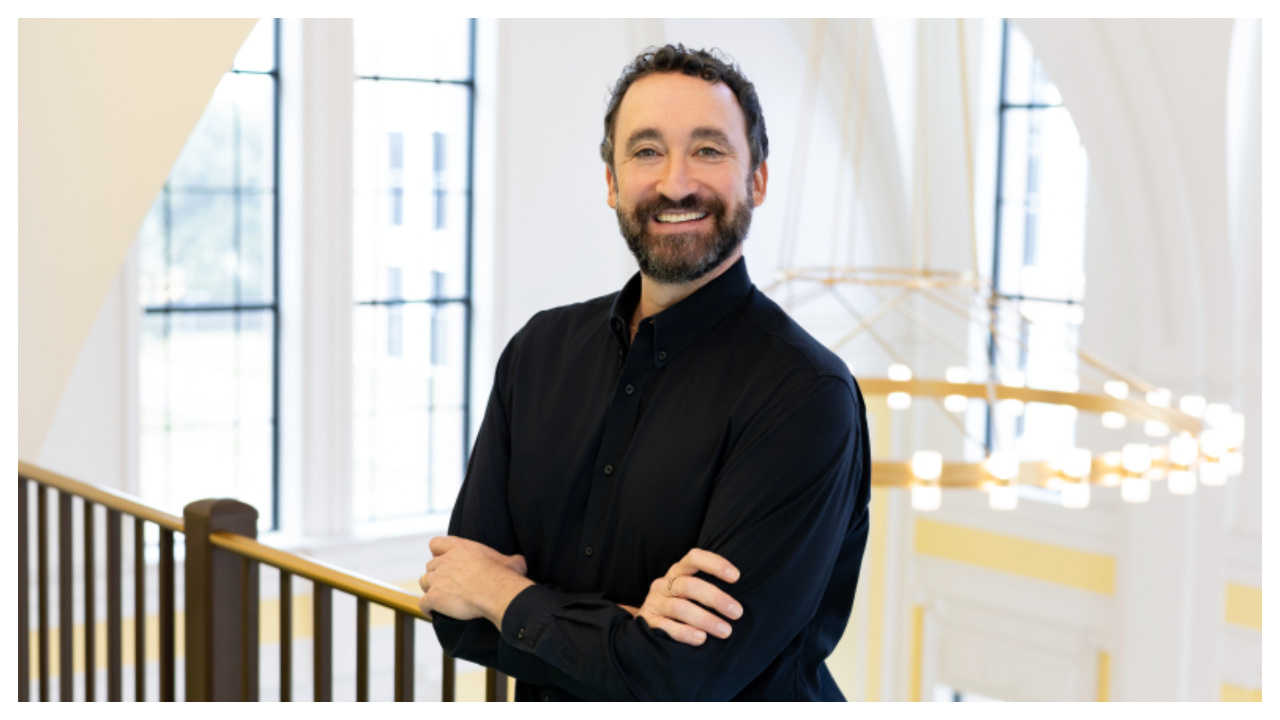
Following my conversation with Dean Matthew Loden, I was able to speak with Joshua Winograde, bass-baritone and Director of the Opera Studies Department. Winograde has held leading positions in artistic programming and casting for companies such as LA Opera, the Metropolitan Opera, and currently serves as the Casting Consultant for the American Symphony Orchestra, Bard SummerScape and Music Festival, and The Orchestra Now.
SF: Having served on numerous audition and casting panels, what would you say directors and judges are looking for most in prospective singers?
JW: “My experience at LA Opera, being in charge of casting there, and then for a brief time at the Metropolitan Opera, cemented what I had already known as a singer, which is: audiences respond, regardless of their level of exposure to opera prior, they respond to exquisite singing. They may not even know they’re an opera fan, but if they are not listening to singing that is embedded with real expression and emotion, they tune out quickly; I’ve seen it happen. Even people who might not know the difference between what we consider today to be an appropriately-classical, Mozart style, versus whatever. When it’s done right, they respond; it’s almost visceral, it just works.
I think what I tell students all the time is when you’re up there performing, there has got to be clear evidence to me that you love this. And it’s okay to fake it because, as a former bass-baritone, I’m not going to pretend that I loved getting another Colline or another Basilio when it’s your 17th production and you have to say goodbye to your overcoat one more time, but you have to either love it or fake it right. Without that kind of genuine affection and regard for trying to fill the music with expression, audiences know it’s empty.
We’re all looking for extraordinary technicians, exquisite linguists, great actors, but there are people forgiven for slight flaws in each of those categories as long as the presentation feels truthful and meaningful. We’re really lucky at the Shepherd School to have unbelievable singers, casting directors, agents, and other experts coming through our town and work with our students. One of them was Arturo Chacon-Cruz, who was in Houston to sing ‘Il Trittico’ with HGO, and gave us some of his time to work with our students, and he told us he doesn’t even warm up without there being some emotion in the sound. For example, if he’ll do a vocal exercise, he’ll do it as if he’s calling to his pet; he’ll infuse the sound with an emotion, or an exercise that feels connected to weeping or something like that. He does that because he says no sound can be void of a feeling inside it, and I thought that was so, so profound. Ever since I heard him say that, I’ve thought that’s the truth that we’re all looking for in a singer.”
SF: What are some of the things audiences can look forward to about this production? Besides the setting, has anything else been brought into a more modern perspective?
JW: “Obviously, the score and the libretto don’t change. So audience will certainly hear and exquisite and authentic performance of Verdi and Boito’s masterpiece work, but I feel it’s our obligation to provide the students with what’s out there in the real world, so when they do get out there it’s not a shock to the system. I’m not afraid of director who want to modernize productions here, which doesn’t mean that we do that for everything, it just means when a director feels compelled to, we let them go with it, because I know that is something that students who want to be out there in the industry, when they finish their academic pursuits, that’s something they’re going to encounter more often than not.
On top of that, I also think one of our obligations in terms of programming for our public performances is that these obviously remain extremely educational experiences for the students, and so I had realized when we were going through the students that were both returning for their subsequent years of school or joining us for their first, looking at what it all added up to, and basically realized we were casting a ‘Falstaff.’ I also realized that it was the first time in my three years are Rice that we will have approached subject matter that had roots in Shakespeare.
When I came to Rice, we did ‘Onegin,’ which of course has deep literary roots as well, we did mythological roots with ‘Dido & Aeneas’ and ‘Rape of Lucretia,’ but this was the first Shakespeare and I thought, in terms of providing an educational experience for the singers, we really should have a director who knows a lot about opera, but really has roots in theatre that goes back to Shakespeare or before.
I had seen some productions at Rec Room Arts, which is the extraordinary and award-winning local theatre company that many people regard as one of the most exciting in Houston, so I had become familiar with the work of Matt Hune, the artistic director, and thought it would be a great opportunity not only for our students to be in a production conceived and executed by somebody who was comfortable with opera and Shakespeare, but also somebody local; I thought that was really special. Matt was able to assemble a team of creators, designers, scenic lighting and costumes, that are all local, which is I believe a first for Rice. I thought this was a really nice way of us, in our 50th anniversary season, kind of celebrating Houston.”
SF: To touch on what you said earlier, at what point did you know you were casting a ‘Falstaff?’
JW: “When you look at an opera, for example ‘Falstaff,’ there are singers that may disagree with what I’m about to say, but as I look at ‘Falstaff’ from a casting perspective, I think some roles are able to be cast in a variety of ways, and then some roles require just exactly the person needed for the role. What I try to do is try to make sure that we can definitely nail those down, because without those we’re forcing somebody to do something not meant for them. So in ‘Falstaff,’ those two roles are John Falstaff and Ford, and Falstaff is an enormous role with more Italian language than I can think of– maybe Suzanna in ‘Nozze di Figaro’—but Falstaff is pretty close, and extremely rangey. It also requires somebody willing to alter the color of their voice with absolute intrepidness to suit the obvious character very infused into it.
Verdi is not, as I think on at least the 10 operas before ‘Falstaff,’ he doesn’t tend to include leading roles in which there are things employed like frequent use of the baritone’s falsetto, spoken parlando, things like that. Because it requires such a characterful delivery and such an enormous range, and a minimum size that can be heard over a 60-person orchestra. Ford is similar as he needs to be a character that we are both rooting for and rooting against, and so there has to be something kind of powerful but also kind of desperate in the sound.
When I was looking around, and I thought ‘we have these two extraordinary artists,’ Matan Gendelman and Tzvi Bat Asherah, and they’re really ready to be featured as something, what’s a list of roles that would be perfect for them? And as I realized on Tzvi’s list was Ford, and on Matan’s was Falstaff, so we got a Meg, we got an Alice Ford, etc, how could this have happened any better?”
SF: In your opinion, how does the Shepherd School prepare students beyond the stage?
JW: “Two of the four courses that I teach are performance-based, and two are what I think of as being more in the industry-based, and it gives me an opportunity to bring in experts from the field who have their finger on the pulse in all of these areas, so they work with people on media training, artistic areas; one of the very important advancements in contemporary theatre stagings is that we have people to make sure artists on stage feel respected and safe. We have people overseeing things like intimacy coordination, so they’re working with people in those ever-evolving areas of the industry.
In addition to the standards of knowing how to audition well, we have, for example, renowned tenor Ben Bliss, who was a young artist when I was at LA Opera, coming in next week to do a class on the business of being an independent contractor in the field of classical music. The university offers various courses in professional development that are always trying to mirror what’s happening in the industry at large.”